Showing posts with label Tacurong. Show all posts

0

BULUAN (tula or Fiipino poem)

Posted on Thursday, 10 May 2018


BULUAN
Ni Apolinario Villalobos

Sinapupunan ng kulturang Magindanaw
Emperyong maharlika na malawak ang saklaw
Kutabato na sa kasaysayan ay malalim ang tatak
Dahil katapangan ng mga ninuno ay ‘di mahahamak.

Magandang buhay, bigay ng lawa at ilog
Mga dalag, tilapia, bagtis, taruk na malulusog
Mga biyaya na bigay ni Allah, hindi ipinagdamot
Pinapasalamatan kahit minsan, huli’y kakarampot.

Mayamang kulturang sa INAUL ay ipinakita
‘Di lang ang bansang Pilipinas dito’y humanga
Kahit sa ibang sulok ng mundo ito ay napansin din
Napagtagumpayan na sa katagalan ay isang hangarin.

Naging tahanan ng mga Ilokano at Bisaya
Sinundan ng ibang may hangaring guminhawa
Hindi naman pinagkaitan ng mga ninunong datu
Pagkakataon na nakita rin ng mga dumayong Tsino.

“Ina” na maituturing ng Tacurong at Quirino
Malawak na bayang nagbigay-buhay sa mga ito
Katotohanang kinikilala ng mga mamayan ngayon
Hindi kalilimutan sa lahat ng pagkakataon at panahon.

Oh, Buluan, sa iyo kami ay nagbibigay-pugay
Ang masambit ka, nagpapasigla sa aming buhay
Napadako man kami sa iba’t ibang lunsod at bayan
Ugat ka pa ring maituturing na aming pinanggalingan!


0

I LOVE YOU TACURONG! (poem in English, Tagalog, Hiligaynon and Cebuano)

Posted on Wednesday, 9 May 2018


I LOVE YOU TACURONG!
Ni Apolinario Villalobos

Maskin ano pa ang ihambal nila
Indi gid nila ako mapasala kon sin-o ako
Kay diri sa Tacurong ako ginbata
Nga ginapadayaw ko gid sa iban nga tawo.

Nawala man ako ng ilang dekada
Lumingon pa rin ako sa mga nakaraan –
Mga araw na tigib ng saya’t ligaya
Talagang ‘di makakalimutan kaylan man.

I will not be what I am today
As I trace my roots to beloved Tacurong
For which more progress I pray
And praises that I could shout in a song!

Daghan pud ko ug gipangandoy
Bisan ug sa kalsada sige pud ko ug dulâ
Nangandoy ug maayong kinabuhi
Maningkamot, di gyud mangayo’g kalu-oy!

Ang pagsisikap ko ay nagbunga
Kaya sa maliit na paraan ay ibinabalik ko
Mga biyaya na aking natamasa
Pagtanaw ng utang loob na noo’y ipinangako!

Here I am, my beloved Tacurong
Indi ta gid tana pag-ikahuya maskin san-o
Dahil kung hindi sa iyong pagkanlong
Basi’g wâ gyu’y nahitabo sa akong pagkatawo!

I LOVE YOU TACURONG!


0

Depressed...

Posted on Tuesday, 1 May 2018


Depressed…
By Raichi

I work hard to be free,
but still no one seems to appreciate me;
 I know I’m okay, but i still feel awful.
I have peers and friends
many of them, I know they love you (me) ,
but it doesn’t feel like they do.
I’m doing something to make me feel better
but i just don’t know how to.
Man, I’m smiling,
but i wake up every day
with this weird feeling
stacking up problems
that are so unnecessary,
but i hope someday
 I’ll wake up happy and merry…
I know this struggle’s gonna last
and i want to end it… fast.


0

The Propagation of Catholicism in Tacurong and How It Became the Nuestra Senora de la Candelaria Parish

Posted on Sunday, 28 January 2018


The Propagation of Catholicism in Tacurong
And How It Became the Nuestra Seῆora de La Candelaria Parish
By Apolinario Villalobos

Before Tacurong became a parish, the Mass held at the makeshift chapel was celebrated by priests from Marbel (today, Koronadal City) and Cotabato City. The propagation of Catholcism in the struggling town whose political development began as a sitio of Buluan, was hastened by the opening of the Notre Dame campus for boys by the Oblates of Mary Immaculate (OMI) and girls by the Dominican (OP) nuns. The church stood between the mentioned campuses. The priests’ convent doubled as office and quarters for the Director of the Notre Dame for boys and the parish priest. On the other side of the church was the convent of the Dominican nuns. The Mass for the boys and girls was celebrated separately. Much later, when the Oblates of Notre Dame (OND) arrived, a convent for them was built beside the stage of the the Boys’ department.

The Nuestra Seῆora de la Candelaria became the patroness of Tacurong upon the recommendation of Mrs. Josefina Lechonsito who was enthralled and impressed by the Virgin’s image at Jaro, Iloilo. Mrs. Josefina Lechonsito was among the pioneer and well-loved teachers of the Notre Dame Boys’ and later, the College Department. Her suggestion was considered and soon as if on cue, prominent families, such as the Montillas, Lapuzes, Tulios, Velascos, Talmadges, French, Jarrels, Garcias, Espinosas, Lechonsitos,  and many others pitched in their resources for the establishment of the parish foundation and the transformation of the church into what it is today.  The bell was donated by Don Vicente and Doῆa Salud Garcia, Don Juan Garcia and his wife, Mrs. Maria Montilla, and Mrs. And Mrs. Roberto Tulio. The four massive posts for the bell tower were donated by Mr. Menandro Lapuz. A little later, other families joined the enthusiastic movement that led to the formation of civic and religious organizations.

The Knights of Columbus, Jaycees, Cursillo-Samaria, Legion of Mary were organized, as well as, their counterparts for the youth and students such as Student Catholic Action (SCA), CHIRO, The Encounterers’, and Columbian Squires. To ensure the consistency of the effort, senior high school students of the Notre Dame Girls Department were required to conduct catechism at the Tacurong Pilot Elementary School. The catechism was conducted even during school breaks and to encourage the attendance of the children, free cookies were given them, as provided by the Garcias who owned the first bakery in Tacurong. Much later, the PREX was also organized and whose effort was felt even in other parts of the province. Today, church groups are organized for specific purposes such as those for the family and youth, in accordance with the Vatican’s direction.

The early activities that involved seminars for the recruits of the SAMARIA and CURSILLO were alternately held at vacant rooms of the Boys and Girls Department. When enough fund was collected, a SAMARIA HOUSE was built at the back of the church. It was later used by Theology students of the College department for some of their activities. The other activities of the groups were held at Tamontaka in Cotabato City. During seminars, the “working committee” was always led by Mrs. Dominga Espaῆa who did the budgeting for the food and Mrs. Bonoc Cajandig who led the prayer before meals and taking care of the utensils.

The Girls Department of Notre Dame had their own organist during their Mass while the Boys Department had Ms. Tan, a pretty teacher as its own. When the Training Department (Elementary) was opened, separate Masses were also held for the pupils and their singing was conducted by Ernesto Cajandig. On the other hand, convent assistants, Agustin Carvajal, Romeo Balinas, Noel Niervo, and two other colleagues, as well as, members of the Knights of the Altar assisted the parish priest or his assistant in celebrating the Mass in the barrios. They were driven on the hardy jeep by a certain de los Reyes who also tinkered with the noisy generator every time it conked down. Agustin Carvajal also served as the soloist of the parish choir during the time, providing accompaniment with his guitar if the organist was not around.

During the fiesta for the patroness, “live” personification of the Virgin Mary enlivened the procession. Among those who played the role of the Virgin Mary were a certain Mojado, one of the pretty Tarrosa sisters who are known for their long hair, Concepcion Betita (Cainglet). The Notre Dame band with its few instruments provided the solemn processional hymns.

The feast for the patroness is held every February 2 and Tacurongnons are wishing that it should be consistently held without much fanfare and less expenses that would definitely come from their pockets. For the procession, simply decorated float for the image of patroness should be enough, with the CHURCH ACTIVITIES REVOLVING around her, and the feast not taking several days to celebrate to maintain solemnity that veils her.

IT SHOULD BE NOTED THAT WHAT IS BEING CELEBRATED, IS THE GLORY OF THE RECOGNITION GIVEN TO THE PATRONESS AS THE BEARER OF THE CANDLE THAT SYMBOLIZES THE LIGHT OF THE WORLD AND THOSE WHO ARE SEEKING THE PATH THAT LEADS TO SALVATION…NOT ANY DELICACY, FLOWER, BIRD, MUSIC, ETC. IF SOME SECTORS WOULD LIKE TO RIDE ON THE POPULARITY OF THE PATRONESS, THEY SHOULD DO THEIR CELEBRATION OUTSIDE THE CHURCH PREMISES, SO AS NOT TO TAINT THE RELIGIOSITY OF THE FEAST.


0

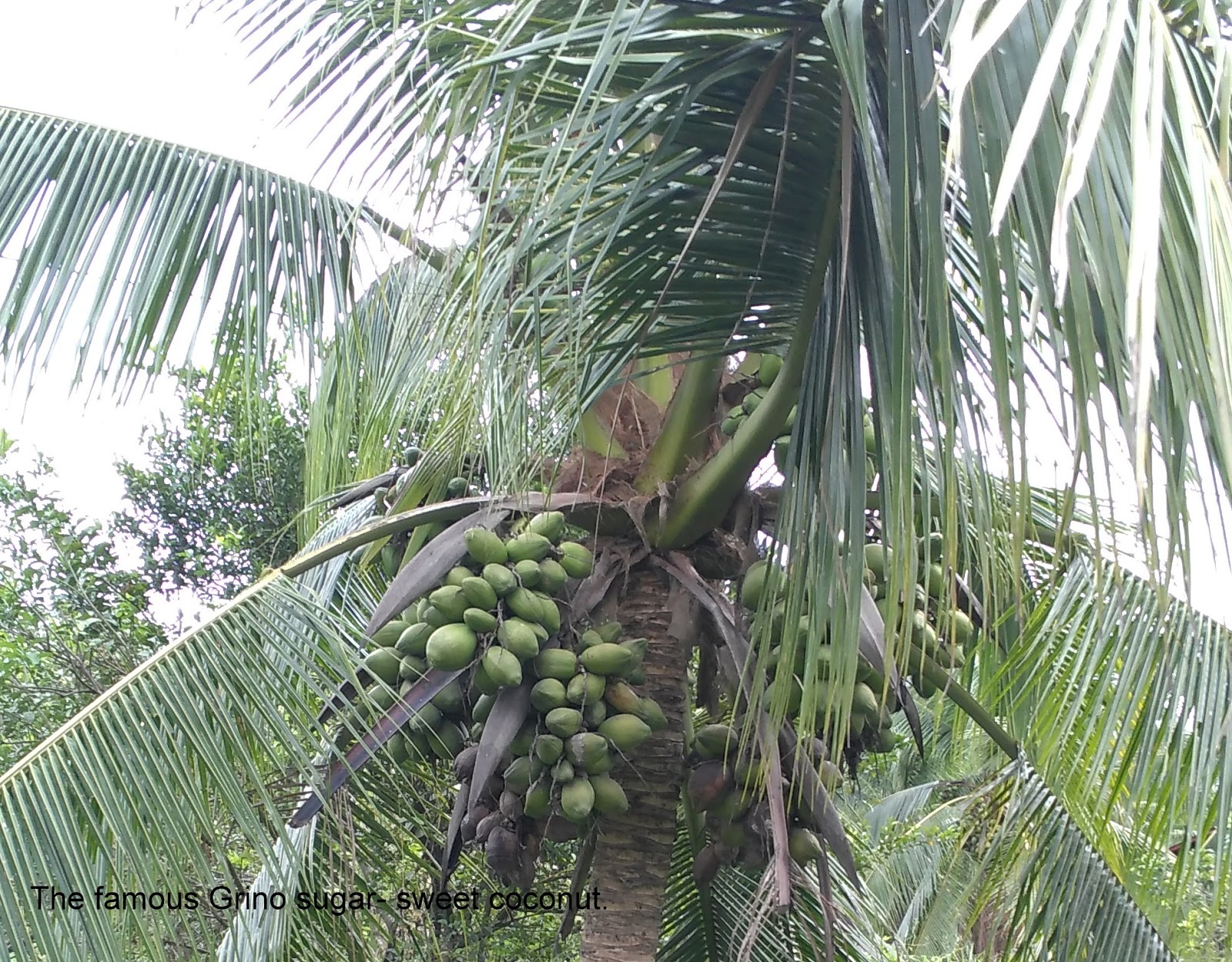
The Barangay Grino of Tacurong

Posted on Thursday, 11 January 2018

The Barangay Griῆo of Tacurong
By Apolinario Villalobos

The Barangay Griῆo was formerly known as Gansing that lies at the boundary shared with the town of Lambayong, formerly, the gateway of settlers from Visayas who settled first in what is now known as New Passi before spreading out to other parts of the once sparsely populated areas that include Tantangan, highlands of Magon and Tacub, and the lowlands of Tacurong. The area was thickly covered with talahib, talisay, cogon and “enyam” (bignay}. Among the pioneer families that settled in the area is the Griῆo, whose patriarch was the late Dr. Manuel J. Griῆo. As he found the land promising, he invited friends in Iloilo to join him. Soon, others who came from Negros also came. Accordingly, the first classes were held in a “bodega” (warehouse) of the Griῆo family where about 50 pupils were taught, and one of the teachers was Ernestina Davala-Alvarez.

Today, Griῆo is a flourishing barangay with the expanse of fertile land shared by rice fields and African palm plantations. Observably, the barangay has a well-maintained system of irrigation canals that provide sustenance to the plantations. It is also among the barangays of Tacurong where Christians live peacefully with Muslims.

The barangay has two Catholic chapels, the Immaculate Conception (main) and San Isidro Labrador, both situated along the highway. According to one of the lay Catholic leaders, the parish priest of the Our Lady of the Candles of Tacurong officiates the Mass during the first and last Sundays of the month. The two Muslim communities have their own respective mosque.

The barangay has an elementary school, the Dr. Manuel J. Griῆo Memorial Central School and a high school, the Virginia F. Griῆo Memorial National High School which has facilities for the senior students of the K-12 educational program of the government. The most popular courses of the senior high school are electronics, welding, cookery, masonry, and hotel housekeeping.


When I went around the barangay, I was fortunate to have been driven on his tricycle by Fernando Gulac, the CVO Unit Commander of Barangay Griῆo whose chairman is Romeo Panes.


0

Panawagan sa Mga Naghahasik ng Pangamba

Posted on Wednesday, 18 October 2017

Panawagan sa Mga Naghahasik ng Pangamba…
Ni Apolinario Villalobos

Ang panawagan na ito isang simpleng tangka upang mabuksan ang inyong isip at maantig ang inyong damdamin tungkol sa mga ginagawa ninyong paghasik ng pangamba sa mga kababayang namumuhay ng mapayapa…silang mga nagtatrabaho ng marangal at mga kabataang nag-aaral upang balang araw ay makatulong sa bayan.

Sa ginagawa ninyong panghoholdap at pangri-rape, sana ay maisip din ninyo na kayo ay may mga mahal sa buhay na maaaring gawan din ng ginagawa ninyo…maliban na lang kung kayo ay nag-iisa sa buhay. Kawawa ang mga biktima ninyo na ang hangad lang ay kumayod nang maayos upang may maipakain sa pamilya. Ang mga kabataang nilalakasan ang loob sa pag-uwi mula sa eskwela kahit mahirap sumakay ay may mga pangarap sa buhay tulad ng pagtulong sa pamilya at bayan.

Masakit para sa mga mahal sa buhay ng mga biktima ninyo ang makita silang kalunus-lunos ang kalagayan pagkatapos pagnakawan at saksakin o di kaya ay gahasain pagkatapos pa ring pagnakawan. Hindi madaling tanggapin ng mga anak ang mawalan ng amang naging biktima ng panghoholdap, na maliban sa nawalan na ng perang pambili ng bigas, ay nasaksak pa!

Alam kong may mga pangangailangan kayo at ang iba sa inyo ay tinuturing na kapit sa patalim ang panghoholdap. Subalit may paraan para kayo ay kumita sa marangal na paraan…nang hindi nakakaperhuwisyo ng kapwa. May mga pilay o lumpo na nakakayang magtinda o di kaya ay mga kabataang nagtatrabaho bilang crew sa mga fast food chains upang kumita ng pang-tuition…. Ilan lang silang kumakayod ng marangal…bakit hindi ninyo gayahin ang kanilang pagsisikap?

Nang dahil sa ginagawa ninyong panghoholdap pagkatapos magkunwaring namamasada ng traysikel sa gabi, ang mga lehitimong mga traysikel drayber ay hindi na tuloy pinagkakatiwalaan…pati mga naghahabal-habal sa ibang barangay at bayan. Malaki ang epekto sa kabuuhan ng isang bayan ang ginagawa ninyong paghahasik ng pangamba. Paano pang uusad ng pasulong ang isang barangay, bayan o lunsod kung pinipigilan ninyo dahil sa inyong ginagawa? Kung kayo ay nakatira sa isang maliit lang namang bayan, dapat ay makipagtulugan na lang kayo sa lokal na pamahalaan para na rin sa kapakanan at kapakinabangan ng inyong pamilya ng .

Kung wala kayong hinahasik na pangamba sa inyong kapwa, ang ating bansang nakalugmok na sa kahirapan, kahit paano ay makakaraos kahit bahagya. Lahat tayo ay Pilipino kaya walang ibang dapat na nagtutulungan sa isa’t  isa kundi tayo….para sa katiwasayan ng kasalukuyan at kaginhawahan ng ating hinaharap.  Sana ay magbago na kayo….


0

SERAFIN P. BERNARDO...his journey from Passi, Iloilo to Tacurong, Sultan Kudarat (Part 1)

Posted on Thursday, 28 September 2017

SERAFIN P. BERNARDO…his journey from Passi, Iloilo to Tacurong (Part 1)
By Apolinario Villalobos

The ancestral family of  Serafin P. Bernardo is from the Negros province, particulary, Victorias, but settled in Passi, Iloilo which they, henceforth, considered as their hometown. He had a penpal, Ciloy Levita who invited him to check Tacurong for himself if it would suit his adventurous plan to settle in Mindanao. During the time, the undeveloped territory of Tacurong extended as far as San Felipe of Tantangan. In 1946, when the WWII just ended, he finally visited Tacurong to check and went as far as the area that is now covered by Kalandagan and Carmen after which he left again for Passi where he was working as Chief of Police.  

In 1948, he came back to Tacurong with his family in tow, Elisa Panizales, the wife, and three children, Nenita, Nonito, and Judith. When they arrived in Cotabato, the family took a “ferry” that brought them to Buluan. During the time, visitors with plenty of luggage usually disembarked at Buluan which had some sort of a “pier”. Those with a few luggage went as far as Sapakan, bordering Ligwasan Marsh and crossed the river to Tinumiguez, then proceeded to Lambayong which was well developed ahead of Tacurong.

Among the prominent families in Lambayong then, were the Guerreros and Luceros. The only road from Lambayong that ended into a foot trail that branched into several, was a portion of what is now Alunan highway.  For this reason, old Hispanic houses could still be found in the area, prominent among which is the Rapacon residence. The areas encompassing what is today’s downtown were either rice fields or marsh lands. When they arrived in Tacurong, Serafin bought a lot along Mabini St. where he built a big house behind which another smaller house was built and which the Levitas occupied. Later he bought a lot near MINPROCOR, particularly along Quezon Ave. which was eventually given to the Levitas.

Serafin’s  youngest daughter, Judith and son, Nonito, recalled that their father purchased 5 hectares of land in an area which was then called “Mangilala” (referred today as the one covered by Carmen and Kalandagan), followed by two more parcels of 5 hectares each. Purchases were also made beside the property by his only sister, Angelica, married to Felix Villalobos, and his youngest brother, Serafin Bernardo, Jr.

Later, the 15 hectares were sold, with the proceeds used to purchase lands in what is now New Passi, but which was originally referred to by settlers as “Katil”. It was purchased from DATU KANDELAYANG KAMSA. The purchase was witnessed by DATU KUDANDENG AND DATU LUMINOG. It covered more than 100 hectares of land. With the purchase sealed, he went back to Passi to invite relatives to settle in the place. That was how the Pauyas, Palomos, Parreῆos, Pamposas, Pamas, Palabricas and many more got settled in the area which they aptly named, “New Passi”. According to Tomas Pauya, he came with a group in 1954. Arriving at Lambayong, they hiked up to New Passi…he was very young then, and got enrolled in the New Passi Elementary School when his family arrived. He recalled a classmate, Lagrimas Pamposa as their consistent “First Honor”.

Later, the families of French, Garcia, Aguilar, Cunningham, Cordero, Panes, and many others came but settled in the adjacent area, now called Rajah Muda. Many families including those of Jarell and  Braga, also came and settled in Baras and Upper Katungal. As roads from the fast developing Tacurong were constructed, more settlers from Iloilo came and settled at Lower Katungal, Upper Katungal, Baras, New Passi and Rajah Muda. The more adventurous settlers went up to Magon and further on to Tacub where they intermarried with the Bla’ans. An area which is now part of South Cotabato was also settled by Ilonggos, hence, aptly named, “New Iloilo”. The Eastern portion of Tacurong got settled by Ilocanos while those in the North, by other settlers from the various towns of Iloilo.

Serafin also purchased some lands around the Dulawan Estate, the downtown area, and Dadiangas (today, General Santos City). Meanwhile, other areas near New Passi, Rajah Muda, Baras, Katungal, and Lagao were also initially settled by the Garcias and Montillas. The development brought about KENRAM (due to the early produce – kenap and ramie) and ALACor (Ala Corporation). Today, a portion of Lagao is politically recognized as Barangay JC Montilla which is covered with African palm plantations. According to Nonito Bernardo, the Dulawan Estate, included Kapingkong, Tambak, Palumbi, Udtong, and Katitisan.  Lambayong shares the border with Tacurong City’s Barangay Griῆo (formerly, Gansing). An airport station was opened at KENRAM with a short runway for commercial flights utilizing DC-3s.  It was closed when the Surallah station was opened.

The first mayor of Tacurong was Mr. Soriano and a photo has recorded his first meeting with the Council and officials. Serafin was among the Councilors. The development of Tacurong was hectic as shown by the organization of FACOMA (Farmers Cooperative and Marketing Association), a farmers’ cooperative with Serafin Limbungan as the first President. At the time, bridges were built along with roads that finally linked Tacurong with Marbel (today, Koronadal City), Isulan leading to Cotabato City and Surallah, as well as, Lambayong and Buluan. Today, the road to Buluan leads all the way to Davao, Kidapawan, Bukidnon, and Cagayan de Oro. Nonito Bernardo also recalled that during election campaigns, they would go to as far as San Felipe in Tantangan, as the latter was still within the political territory of Tacurong. The lone lady and most popular political figure during the time was Amalia Pabilona.

Ms. Nenita Bernardo recalled that when they studied in Marbel during the early 1950s, they hiked the distance from Tacurong to the said town as there was no public transportation that plied between them, then. They would hike to Marbel on Sundays with their provisions loaded on a cart pulled by a carabao. On Fridays, they would hike back to Tacurong for the weekend. For their convenience they boarded in Marbel.  With them making the trek were Lucia Paladin, Rafael and Delfin Pama, the Dasmariῆas siblings, Gelacio and Usting Panes.

Serafin served as Vice-Mayor in Tacurong for three consecutive terms, finally, retiring from politics to devote his time to farming. He would still wake up at 3:00AM, a habit that he did not change, roll several tobacco cigars for the day, and read what he could find around – magazines and even old issues of newspapers with the aid of an antique kerosene lamp.  Before sunrise, he would be ready to go to New Passi with his adopted son, “Digol” (Rodrigo) driving the “pick up”. He delighted in talking to relatives and farm hands the whole day in the farm. One of them recalled how during planting seasons, everyday he would  bring dried fish to be roasted on coals, while those who were not planting rice seedlings would cook “apan-apan”, kangkong sautéed in ginamos (salted krill paste).  Before dusk, he would be driven back home by Digol.

The Sultan Kudarat Electric Company (SUKELCO) building was among his investments in the downtown area  aside from other residential lots, including the more than 700 square meters at Mabini St. where the ancestral house stands. They were purchased with the produce coaxed from the farm. The SUKELCO building is now owned by the said cooperative. As a clarification on his acquisitions, the proceeds for their purchase came from the produce of his farms in New Passi and Baras, which today are planted to African palms.

As Vice-Mayor of Tacurong, his wage was not even enough for the dole outs that he made.
I have heard so many stories about his benevolence, such that relatives and acquaintances would trek to their home at Mabini St. to seek financial assistance which he readily gave. His early morning sojourns to his farm was stopped by the onset of a crippling rheumatism that affected his knees. From then on, the only opportunity for him to savor the outdoors was when he was brought to the terrace on a wheelchair where he waved back at friends who passed by. He finally rested at the age of 102.


0

I am a Filipino, proud...yet, suffer, too

Posted on Tuesday, 26 September 2017

I am a Filipino, proud
            …yet suffer, too
By Apolinario B Villalobos

“Let us not lose hope…”
This I have to say first
For if I won’t, but instead
Put that line at the end
I will be stirring your anger
That I will just regret later.

When foreign people
Set foot on our sacred shore
Our ancestors welcomed them -
Not just with smile
But warm embrace
Showed them kindness
Showed them love -
The way of Filipinos
As the whole world know.

The Chinese brought pots and silk
Gave names to our islands and islets,
The Japanese brought their skill
And goods of steel,
Spain sent forth Christianity
Tainted with gracious civility,
The Americans brought more-
More than what we could muster
And  all of these-
Supposed to enrich our culture
But instead, defiled our identity
Stained much of it with sheer gravity!

I hear Filipinos speak English with a twang
But should not be, when they speak our language –
Filipino, the rich language of every Juan.

I see Filipinos enjoy foreign food, every bit of it
But should not be, when they push aside
Our own sinigang and pinakbet.

I hear Filipinos sing foreign songs so soulfully
It’s just nice, but not when they despise
Our own that should be sung with dignity.

Deep inside, I suffer as I see and hear them
I know that just like me, others out there
Are gritting their teeth but can’t do anything;
Proud as a Filipino, yes I am
But so many things are left undone –
Things that our heroes in the past have begun
They who put color
To the vivid pages of our history;
Things that should have been done
By our heroes of today
But who died just when a new light
Started to shine on our democracy.

Leaders, policy makers, lawmakers…
Are they…really?
They who warble promises
And steal the people’s money?
Paid with lofty sum from the coffer
Where money for those who suffer
Should have come
But only the few – these warblers
Enjoyed no end, they who are supposed
To be brimming with wisdom!

After the father, comes the wife
Then the daughter, and the son
Not contented, the cousins and in-laws
All in the family, to power they strut
With a taunt in their face that says:
“What are we in power for,
And you with money has none
Eat your heart out, here we come!”

Rain that used to bless the earth
Filipinos now desist
Especially those who live
Along the river banks of the cities
For with it comes the flood
A curse that only the Bible says
Shall wipe out sinners
From the face of the earth;
But why…the floods?
Simple: the money for saving projects
The conscienceless -
Unscrupulously pocketed!

Innocent lengths of asphalted roads
That for long defied the trash of nature
Helplessly wrecked by greedy contractors
So that low-grade fresh overlay can be spread
Later giving up to rain’s patters
And treading of cars, trucks, and all…

Even the precious school books are not spared
By purported educators blinded with greed
Seeing to it that new ones, yearly will be printed
Exam questions, at the end of every chapter
Are cleverly printed!
So then, closing school years would also see
These books so dear, become useless -
Thrown to the garbage, not to be used
By aspiring younger brood of the family.

I am pained by the sight
Of plates at restaurants
and food stations of the malls -
Half –finished food left with pride
By those who seem to say
“I am rich, I can squander money”
And who never thought
That out there in the dumps
Some brethrens try to salvage morsels -
Precious food that could be stuffed
Into their guts so they can live
Better than nothing, or they’re dead.

I said in the beginning of this:
Let us not lose hope…
But wish for the best
If we strive together
And do what is right
Then new life for us

Will be in sight!

0

John Rey Posadas Aliwalas...young portrait artist and pride of Tacurong National High School

Posted on Wednesday, 20 September 2017

JOHN REY POSADAS ALIWALAS…young portrait artist
and pride of Tacurong National High School
By Apolinario Villalobos

John Rey Aliwalas is 16 years old, who lost his mother at a young age and whose father, Jeffrey, drives a tricycle to support him and a sibling. He is the eldest and his sketches have helped him a lot through his studies as a Grade 11 student at Tacurong National High School. The loss of his mother inspired him to to sketch. When his friends discovered his talent, they encouraged him to go on which he did until he found a courage to sketch the portrait of the current mayor of Tacurong City, Honorable Lina Montilla who happily accepted the gift.

John is a consistent honor student who also joins dancing and singing competitions. He confided that he is a self-taught video editor.


JOHN IS AMONG THE RARE YOUNG TALENTS OF TACURONG CITY, WHO DESERVES SUPPORT AND RECOGNITION. VIEWERS MAY CONTACT HIM AT CELLPHONE NUMBER 09464310454.